Sunday, May 20, 2012

The Miami Herald Interview, Unabridged

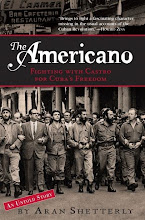
A few weeks ago, a reporter from The Miami Herald asked me a series of questions about William Morgan, an American-born, rebel-hero-turned-traitor-to-the-revolution who was executed by the revolutionary government in Cuba in March 1961. You can read the complete story of Morgan´s life and death (on paper or Kindle)  in my book, The Americano: Fighting with Castro for Cuba´s Freedom. I linked to The Miami Herald articles in my previous blog post.

The primary reason that Morgan is still in the press is that the Cuban woman to whom he was married when he died, Olga Goodwin, has been leading the effort to have his remains, which were buried in a traitor´s grave, repatriated to the United States. Goodwin is remarried and, interestingly, lives in Toledo, Ohio, Morgan´s hometown.

This is far from a simple case. My answers to the reporter´s questions give some sense of the complexity, the politics and the historical context.

(Reading my answers over, I am tempted to make some slight adjustments or additions to what I said. But I have decided not to, wanting to stay true to the answers I gave in the moment the were asked. If people have questions, I will answer them in future blog posts.)

Reporter: Obviously, this isn't just anyone's remains. Would you agree?

Aran Shetterly: I would agree that the case of William Morgan is not a normal circumstance. However, I don´t think that, for the most part, what is going on with Morgan´s remains is about current tensions or divisions between Cuba and the US. It is about things that happened more than fifty years ago. Remember that a year-and-a-half before Morgan was executed in 1961, the United States had revoked William Morgan´s citizenship and Fidel Castro had called Morgan a “Cuban.” Morgan was tried, not as a foreign instigator, but as a high-ranking, rebel soldier who had betrayed the Cuban revolution. Since his death, he has been labeled, officially, a Cuban traitor on the island.While Morgan´s US citizenship has since been recognized in the US, it wouldn´t surprise me at all if there were internal conflicts in Cuba about how to handle this situation.


R: What are the politics of William Morgan today in Cuba, Aran?  Is there a possibility these politics are playing out in the quest for the remains?

AS: My sense is that the politics involved aren´t so much about the United States but have more to do with controlling the historical record inside Cuba.  At high levels, both the US and Cuba have had moments of real openness when discussing the past. Look at the dialogue that has taken place around the Bay of Pigs and the Missile Crisis. Why should William Morgan´s case be so stuck?

First, I would say that Cuba probably doesn´t want to reopen Morgan´s case to public debate.  I think it is safe to say that they didn´t have a strong case for executing him. Put him in jail for starting to organize against them, fine. But, he didn´t have blood on his hands.

Second, people who are classified as traitors become one dimensional in Cuba. The Cuban government doesn´t make much room for dissent, even in the historical record. When I was there researching my book, if people were willing to talk about Morgan at all, they whispered. Officials closed their office doors or, in more than one case, took me outside to speak. It is risky in Cuba to talk about people who have challenged the revolution, people who are considered traitors.

If Cuba were to allow Morgan´s remains to come back to theUS it might open a can of worms there. They would have to explain why a traitor´s remains were being dignified in this manner. What if they had to  speak about a traitor not just as an enemy, but as a whole person, as someone who had believed in the revolution and changed his mind for specific reasons?  It might challenge the binary “you are either with us or against” way of thinking.

Morgan was very popular in Cuba. He was charismatic. And politically and culturally he couldn´t have been more different than Che Guevara, whom the Cubans have been told to emulate for nearly three generations. For whatever reason, the old guard still seems to think Morgan´s memory represents a threat even though most young Cubans have never heard of him. 


R: I know the exile community has taken up a collection, raising $2,500 to help defray the costs if and when the Cuban gives up the bones. Do you think the fact that they are involved could hurt efforts?

AS: Having the Cuban exile community claim Morgan as a martyr to their cause doesn´t help. It is an uncomfortable fit. Morgan claimed to the end that he was not against the revolution, but was against communism. He described himself in general terms as a social democrat.

Take the experiences in Miami of Morgan´s Cuban friends and fellow rebels of the Second National Front of the Escambray, people like Max Lesnik, Ramiro Lorenzo, Bibe Vazquez. Though they are exiles themselves, they have not been embraced by the larger Miami exile community. Eloy Gutierrez Menoyo decided to return to Cuba. Roger Redondo moved to Costa Rica rather than live the day-to-day political tensions in Miami. Morgan shared a vision of Cuba´s future with these men, not with most of the people who left in 1959 and 1960.

Finally, I think it is worth considering one more, much simpler, possibility: Are we sure that the Cubans know where Morgan´s remains are? Maybe they have been lost and admitting this would be more embarrassing than allowing Olga´s pain and the murky ambiguity of the situation to drag on.

AS Quoted in The Miami Herald

I was quoted a few days ago in a sidebar article in The Miami Herald about the effort to have William Morgan´s remains repatriated to the United States. As is usually the case, my lengthy answers were reduced to a couple of soundbites. (Not a complaint, just a fact.) In a subsequent post, I will publish my full answers to the questions that were asked by The Miami Herald reporter.

The lead article to the sidebar was about the discovery of a hard copy of the final letter that William Morgan wrote to his mother just before he was executed. The content of the letter was published in newspapers at the time, so there is nothing new there. However, in a dramatic if minor twist, it turns out the paper copy of the letter itself has been tucked away among the belongings of former UPI reporter, Henry Ramont.

For those who aren´t familiar with it, my book The Americano: Fighting with Castro for Cuba´s Freedom is about the life and death of William Morgan who fought with the Rebels in Cuba against the dictator, Fulgencio Batista. Morgan was one of two non-Cuban majors in the Rebel Army. The other was the famous -- and infamous -- Che Guevara.

It is a story about a man´s courage to reinvent himself in another country and about the international politics and intrigue that got him killed. Click here to read a pretty good review of the book by reporter and writer Richard Cummings.

Tuesday, April 3, 2012

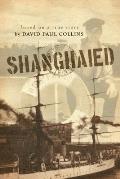
Shanghaied by David Paul Collins: A Review

This is the first part of a two part discussion of David Paul Collins´ book, Shanghaied. This post looks at the book and its story. The second will examine the author´s strategy for publishing and marketing the book.

Shanghaied: The Book

When we meet him, fifteen-year-old Jack Sligo is a boy preparing to slip away from his Boston Irish home in the wee hours of a 1956 summer morning. He climbs out a window, leaving behind a sheltering, middleclass bubble to chase his dream of a glamorous jaunt around the world as deckhand on a cruise ship.

Sligo does end up on a ship, but, as the title suggests, not under his own power. After hitchhiking from Boston to Mobile, Alabama, he is drugged and kidnapped from a seedy sailors´ bar. He awakens the next day on a ship that has already set sail for South America. Merchant ships, like prisons, are confined communities of individuals who don´t always get to choose their own bunkmates or watch mates. Collins leads us deep into a world where young Sligo learns that for a boat to function, the seamen must rely on -- if not fully trust -- one another.

Sligo´s sense of race, religion, family, friendship, work and manhood are all challenged and expanded on the SS Iron Prince whose crew list reads like a phonebook from Queens, New York: There are Filipinos, Cayman Islanders, Eastern Europeans, a German, a Norwegian, a Jamaican, a Brazilian, and a man from the island of Dominica. The boat´s complicated provenance reflects this diversity and contributes to the plot: German officers, US owned, flying under a Liberian flag.

Just three months have elapsed when the book ends, but by then Sligo is a young man, with a new, life-altering sense of the world. In between, we, the readers, live a ripping yarn that carries us from Boston to New York to Mobile to Venezuela and back, with a few unexpected stops along the way. Shanghaied reads like a blockbuster movie script, full of scoundrels and heroes, sensitively rendered by this first-time author.

Collins does a number of things very well in Shanghaied. First among them is his ability to keep an unbroken focus on the first person narrative of the boy, avoiding any temptation of omniscient narration. This close-in POV technique ratchets up the story´s dramatic tension. We, the impotent observers, squirm as we read, unable to protect the boy from the lurking threats and suspect motives that we see, but the more innocent Sligo cannot.

Another of Collins´ intelligent decisions was to write short, tight chapters that set a torrid pace. The book´s 72 chapters average about four-and-a-half pages. Each one ends with forward movement, making it almost impossible to put the book down.

Despite the rush of the honed plot, there are moments of poetry. One of my favorites is a beautifully written, existential conversation that Sligo has with Chips, the ship´s carpenter, about human existence, religion and God´s presence in their lives. Another, when Sligo goes on a transcendental bender in fiery bowels of the ship, brings to mind the famous below-decks blubber-rendering scene in Moby Dick, where Melville strove to render blubber into poetry.

When I clicked away from the final page (I read the book on my Kindle), there was a lump in my throat and a knot in my stomach. Not only did Sligo mature over the course of the book, but so did Collins´ writing in this impressive maiden voyage.

I´m betting there will be a sequel to Shanghaied.  If there is, I look forward to shipping out with Jack Sligo on a new adventure.

Elizabeth Catlett: 1915 - 2012

Elizabeth Catlett, the great American sculptor and the first woman to ever teach fine art at the National Autonomous University of Mexico (UNAM) died yesterday. Meeting her and getting to spend time with her was one of the most rewarding experiences of my and Margot´s nearly seven years in Mexico.

She and her artwork exuded Humanity in its broadest, most generous capital "H" sense. Elizabeth Catlett was smart, funny and non-judgemental, a person who, to quote Thoreau, "live[d] deep and suck[ed] the marrow out of life."

Here is an article that I wrote about her in 2006, entitled Rock of Ages.

Monday, March 26, 2012

Self-Publishing: From A Bar 20 Years Ago, The Internet Today


Nearly 20 years ago, fresh out of college, I was kicking around Costa Rica, setting up an organization that would link international volunteers to local NGOs. The work was challenging (particularly since it was pre-internet browser), but there was plenty of time to explore the local milieu. A couple of times a week, Ernie, who worked with me, and I would head for the happy hour at the Grand Hotel of Costa Rica in the center of San JosĂ©. There we were assured of some interesting conversation to go along with two-for-one beers and the free tapas bar, where we would load up saucer size plates -- dinner for the price of a beer.

Grand Hotel Costa Rica
The Grand Hotel of Costa Rica

On the lovely arcaded terrace, or around the dark wood of the dimly lit bar, we met travelers, expats, international NGO employees, Costa Rican businessmen and government officials. The hotel was a true point of convergence, a little like Chalmun´s Cantina in the original Star Wars movie. Once, as the newly elected president of Costa Rica breezed through the lobby, he stopped to shake our hands and exchange pleasantries.


I remember an Irish entrepreneur who had sold a software business in the US and was hunkered down in a lovely house nestled in the hills above the capital, avoiding the taxman back home. He would swill whiskey, tell us stories, and when he really got going, recite Yeats and reams of Shakespeare in a brogue that seemed doubly exotic in the tropics .

One evening, an Ernest Hemingway look-alike hailed me as I passed his table on the terrace. His neatly trimmed salt-and-pepper beard was set against a black turtle neck sweater. My memory might be embellishing the moment, but I´m pretty sure he wore a black fedora. A stack of books rested beside his beer. In a glance, I realized that the photo on the cover could have been taken at the very moment. Same beard. Same turtleneck. Same hat.

"I am a poet," he announced with a Midwestern twang. "My books are only seven dollars." His black eyes flashed, daring me to defy his shill.

He recited a few of his poems, as I flipped through the slim volume. They were clever, racy, irreverent. A little conversation suggested that his life was a decent representation of his poetry; he bumped around from country to country, peddling his books, drinking beers and chasing women. A true bohemian, I thought.

But odd that he sells his own books. Somehow, this struck me as incongruous, even suspicious.

"Who publishes you?" I asked (annoyingly), thumbing to the title page.

"I publish them myself," he said. "I´m my own boss. I don´t have to wait for a royalty check, and the book sales keep me traveling."

I didn´t know how to respond. This meant the poems hadn´t been selected, edited or printed by a reputable house. He had done it all by himself. Real writers don´t do that.  How vain! A filter slipped between my brain and William James´ (That was his name!) poems.

So much has changed in twenty years. Not only are there lots of volunteer-linking projects like the one I was trying to hustle off the ground in 1993, one hundred percent reliant on the internet, but in the same way that internet dating has become an acceptable way to meet a partner, self-publishing has lost a great deal of its "vanity press" stigma.

Over the past few years, technology has made it easier and easier to publish, market and distribute one´s own work. The lowering of the cost of entry converged with another trend: Many publishing houses don´t really edit anymore, rushing books out into a market as if they were throwing darts a board of market segments. And, they tend to save their marketing dollars for the books that are already selling.

It can make you wonder what benefits do publishing houses really provide, other than the advance against royalties?

I am going to write a series of blog posts that will explore some of the issues around self-publishing, technology, marketing and traditional publishing in the 21st century.

In the next installment, I will talk about two adventure tales, both self-published, but that offer quite different perspectives on the potential benefits of going it on your own.

They are:

Shanghaied by David Paul Collins


Tales of the Sierra Madres: Oro, drogas y fuga, or what happened when I realized that the little boxes of the Fifties had led me to the edge of an abyss by Francis White


But before I end this installment...eleven years after I met William James in Costa Rica, I climbed onto a city bus running north up Collins on Miami Beach. As I scanned for an empty seat, my eyes settled on a familiar face. He was still wearing a black turtleneck. He looked a little tattered around the edges.Perhaps he had been at his professional peak when I met him in ´93. He didn´t seem quite able to place me at the Grand Hotel.

I wonder now: How many books of poetry might William James have sold on Amazon? If he had kept a blog? If he had "friended" everyone he met in his wanders?

But if he had done all that, he probably wouldn´t have spent as much time in balmy terrace bars, enjoying the company of strangers.

My copy of his book is in an attic somewhere. Someday I am sure I will stumble across it.


Monday, February 15, 2010

A Perfect Red

I am reading Amy Butler Greenfield´s book, A Perfect Red, which explores the economic and social history of cochineal, an insect that grows on the nopal cactus and is the source of the world´s best, natural red dye. It is a marvelous history, thoroughly researched, easy to read. It opens up the transition between Aztec Mexico and Spanish Mexico in some interesting ways. For example, it describes in great detail the way in which the Spanish stepped in as beneficiaries of the tribute system set up over centuries by the Aztecs; they displaced and replaced the Mexicans at the mouth of a river of cacao, corn, gold, silver, textiles, and cochineal delivered by subjects spread out over a vast geographical area. The book is also enlightening on the social importance of color, particularly red. Highly recommended for anyone interested in the history of the Americas, textiles, the power of fashion, or the economic relationships between the New World and the Old World. If you get really interested in cochineal you can visit Oaxaca where it continues to be produced and used in the dyeing of textiles, particularly the beautiful rugs produced by the weavers of Teotitlan del Valle.

Sunday, February 14, 2010

Comparing Governments

I recently came across this interesting article by Stephen Kinzer published in the Guardian. In it, he compares the rights and services provided to citizens in Cuba vs. those in other non-state socialist Caribbean and Central American countries. As he lays it out, education, security, health care for Cubans, vs. the legal right (if difficult to realize in practice) to freedom of speech and opportunity for poor Guatemalans, Salvadorans, and others, who often live in fear and have little access to health care and education.

It is a more open approach than you often see in the press, posing a question to readers: Which would you choose? A government in control that curtails your freedoms of speech, commerce, and movement but delivers basic services (you can argue the quality of the Cuban services, but the UN´s health statistics show they do much better than most), or a government that extends these rights on paper, but often can´t guarantee them in practice and doesn´t deliver on the services?

The article reminded me of a conversation I participated in when I was doing research in Cuba in 2002. I was at a cafe with a Cuban artist and an American woman who had just arrived in Cuba from a couple of weeks in Guatemala.

¨Wow,¨ said the woman. ¨Cuba is impressive. I don´t see the misery here that I saw in Guatemala.¨

The Cuban painter bristled at her comment. ¨How can you compare Cuba to Guatemala?¨ he began. ¨We don´t have an indigenous population. Everyone speaks Spanish here, unlike Guatemala. We have good infrastructure, much of which was built in the 1950s. We are a small country, with resources, and cultural cohesion. We shouldn´t be compared with Guatemala. We should be compared with Switzerland. And, if you do that...how do we stand up?¨

It was a paradigm adjusting moment for those of us listening. How do you begin to compare nations? What is a fair comparison? What isn´t? And for sure, if Cuba´s freedoms and services are measured against Switzerland rather than against Guatemala or El Salvador or Nicaragua, the perspective changes.

That said, I think that Kinzer´s question is provocative: If you had to choose, which would be more important to you? The freedom to get the health care you need when you need it, or the freedom to say and publish what you think about your government?

But maybe framing the question this way, as the Cuban painter suggested, is misleading and gives weight to a false dichotomy. What do you think?